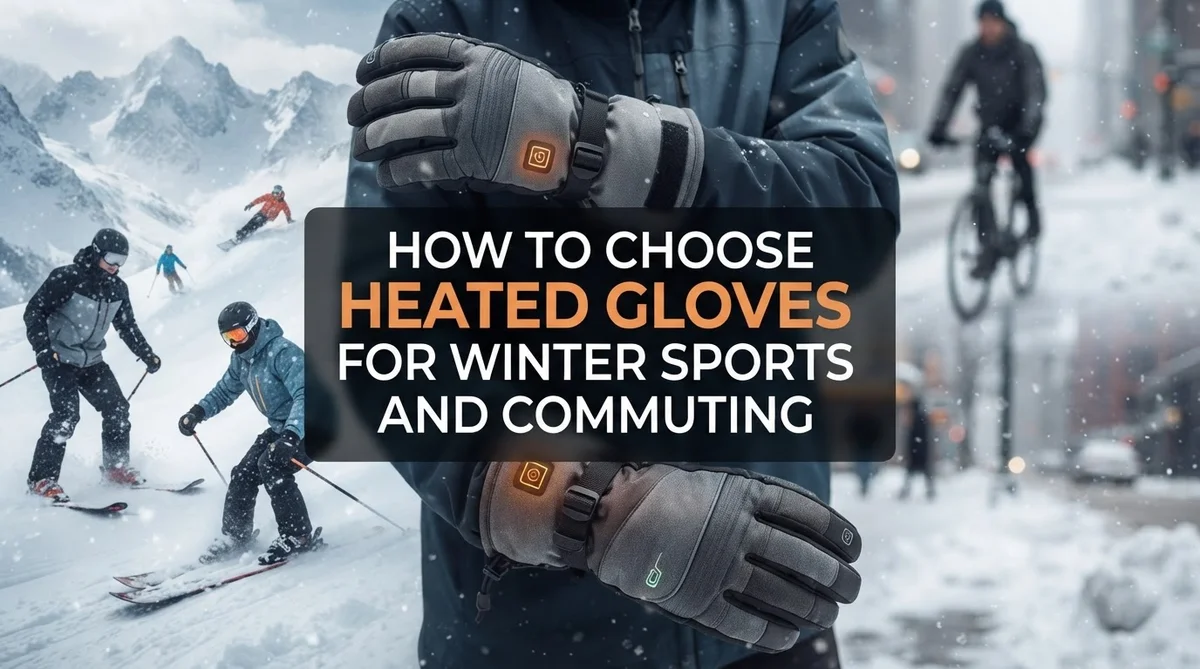
How to Choose Heated Gloves for Winter Sports and Commuting
Winter cold can turn any ride or trail into a painful experience. Your fingers go numb first. Then your grip fails and your focus drops.
Heated gloves solve this problem. They use small electric heaters built into the fabric. This keeps your hands warm even in extreme conditions.
But not all heated gloves work the same way. A pair made for skiing will not suit a daily commute. Sports gloves need flexibility and grip. Commuter gloves need easy touchscreen access and quick warmth.
Choosing the right pair means looking past the brand name. You need to think about your specific activity first. Then you can check the specs that actually matter.
This guide will help you understand what makes a heated glove effective. We will cover battery life, heat coverage, and proper fit. You will also learn about materials that block wind and water.
By the end, you will know exactly what to look for. No more cold fingers ruining your winter days. Let’s find the perfect heated glove for your needs.
In a Nutshell
Here is a quick summary to keep in mind before you buy.
-
Match the glove to your activity. Sports gloves need flexibility and secure cuffs. Commuting gloves need warmth and easy grip for handlebars or phones.
-
Check the outer shell first. It should resist water, block wind, and handle heat without damage. This keeps the warmth in and the cold out.
-
Leave a small gap at your fingertips. A quarter inch of space traps warm air. Gloves that fit too tight actually feel colder.
-
Look at battery life closely. A short battery means cold hands halfway through your day. Pick a battery that matches your full activity time.
-
Feel where the heat goes. Good gloves warm your whole hand, not just your palm. Even heat distribution keeps fingers comfortable in extreme cold.
-
Think about layering for extreme cold. A liner glove under a heated mitten adds extra protection. This combo works well for long hours outside.
Focus on these details, not the brand name. The right fit and features matter more than any label. This simple checklist helps you avoid common buying mistakes.
How Heated Gloves Work
Heated gloves use electric heating elements to warm your hands during cold weather activities. Inside the glove, small resistive wires or heating pads sit close to your skin. These elements connect to a rechargeable battery, usually worn on your wrist or tucked into a pocket.
How the heating works is straightforward. Electricity flows through the wires, creating heat through resistance. This heat radiates outward into the glove material. Most gloves have multiple heating zones so warmth spreads across your palm, fingers, and back of hand.
The battery powers everything. It sends electricity to the heating elements on demand. You control the temperature with a button or switch on the glove itself. Higher settings use more power but create more warmth. Lower settings preserve battery life for longer outdoor time.
Quality matters for heat distribution. Good gloves have heating elements positioned across the entire hand, not just one spot. This prevents cold fingers while your palm stays warm. The placement ensures even warmth from your wrist to your fingertips.
Insulation traps the heat inside. The outer shell blocks wind and moisture. Inner liners keep warmth close to your skin. Together, these layers work with the heating elements to maintain steady temperatures.
Battery capacity determines how long your gloves stay warm. Larger batteries last longer but add weight. Most rechargeable batteries power gloves for four to eight hours depending on heat settings. Higher temperatures drain batteries faster.
The heating elements themselves are durable. They withstand repeated heating and cooling cycles. Quality gloves maintain their heating power through many seasons of use.
Understanding this basic system helps you evaluate gloves properly. You can ask the right questions about battery life, heat coverage, and durability before making a choice.
Identifying Your Use Case: Sports vs. Commuting
Your activity determines which heated glove features matter most. Sports and commuting have different demands, so start by identifying your primary use.
Sports like skiing and snowboarding require gloves with secure cuffs and flexible fingers. You need full dexterity to grip poles, adjust equipment, or navigate terrain. Your gloves will face impacts, moisture from snow, and constant movement. Heat distribution matters less than durability and grip.
Commuting by bike or walking prioritizes consistent warmth over flexibility. Your hands stay in a relatively fixed position, so you don’t need as much finger mobility. Wind resistance becomes critical because you’re moving through cold air for extended periods. Battery life matters more because your commute might last several hours.
Hiking in winter falls between these two extremes. You need moderate dexterity for trail navigation and adjusting gear, plus reliable warmth for stationary moments at viewpoints. Your gloves must handle moisture from exertion and changing conditions.
Outdoor work demands gloves that survive repetitive tasks. You’ll need features that withstand friction, handling materials, and constant use throughout your shift. Heat distribution should cover your entire hand since you’re working, not just staying warm.
Ask yourself these questions to clarify your needs. How long will you wear the gloves at one time? Do you need to remove them frequently? Will you perform precise tasks with your hands? How much movement will you do? What’s the typical temperature range you’ll encounter?
Your answers reveal which specs to prioritize. A commuter might accept slightly less dexterity for longer battery life. A skier might sacrifice battery duration for better grip and cuff security. Someone doing outdoor work needs rugged construction above all else.
Once you know your use case, evaluating specific features becomes much simpler. You’ll focus on what actually matters for your activity instead of getting distracted by marketing claims or brand names.
Key Specs to Evaluate Before Buying
When you shop for heated gloves, focus on five core specifications that directly impact performance. Heat coverage tops the list. Check if heating elements spread across your entire hand or concentrate only on the palm and fingers. Gloves with full coverage keep your whole hand warm, not just one section.
Battery runtime determines whether your hands stay warm all day. If you commute for two hours, pick gloves lasting at least three hours. Sports athletes might need four to six hours of continuous warmth. Always verify the actual runtime under cold conditions, not just ideal lab testing.
Outer material quality prevents heat loss and damage. Your glove shell should be waterproof to block moisture, windproof to reduce heat escape, and flame-retardant so heating elements never damage the fabric. Materials like nylon and polyester work well for most winter activities.
Fit and sizing matter more than you think. Gloves that fit too tight compress insulation and reduce heat trapping. You need enough room for a thin liner glove underneath. Measure your hand circumference and compare it to the manufacturer’s sizing chart. A quarter inch gap at your fingertips allows warm air to circulate.
Durability ratings vary by activity. Commuting gloves face less stress than skiing gloves, which endure constant hand flexing. Check seam reinforcement and material thickness. Outdoor workers need extra durable construction since they perform repetitive tasks.
Test the battery indicator system too. You want a clear way to check remaining power before heading outside. Some gloves offer visual displays while others use simple LED lights.
Compare these five specs side by side. Create a simple chart listing heat coverage, battery life, materials, fit range, and durability notes for each option you consider. This approach removes guesswork and helps you find gloves matching your actual needs.
Getting the Right Fit and Sizing
Getting the right fit means your heated gloves work as intended. A glove that’s too tight compresses the insulation and reduces heat trapping. A glove that’s too loose allows cold air to enter around your wrists and fingers.
Start by measuring your hand circumference around your knuckles with a soft measuring tape. Most heated gloves come in small, medium, large, and extra large sizes based on this measurement. Check the sizing chart for your specific activity, since sports gloves often run smaller than commuting styles.
Leave a quarter inch gap between your fingertip and the glove tip. This space traps warm air and prevents your fingers from pressing against cold fabric. Your fingers should not touch the glove end when you make a relaxed fist.
Consider what you’ll wear underneath. If you plan to use liner gloves beneath heated mittens, size up one full size. The extra room accommodates both layers without cutting off circulation. Tight gloves restrict blood flow, which actually makes your hands colder.
Test the cuff fit carefully. For winter sports, the cuff should seal around your wrist without gaps. It should also fit over your jacket sleeve to prevent snow entry. For commuting, a slightly looser cuff offers comfort during long rides or walks.
Flexibility matters for your intended use. Sports require gloves that bend easily at the knuckles. Commuting gloves can be slightly stiffer since you need less hand dexterity. Try moving your fingers in a curling motion to check this.
Check the thumb placement too. Your thumb should rest naturally without stretching the fabric. If you need to reach or adjust the thumb position, the fit is wrong.
Order from retailers with good return policies. Fit varies between brands, so trying them on first prevents wasted money. Always test the fit with the clothing layers you’ll actually wear during your activity.
Step-by-Step Guide to Selecting the Right Pair
Start by identifying what you’ll actually do while wearing heated gloves. This single decision shapes everything else. Will you ski down mountains, commute on a bike, hike trails, or work outside? Each activity has different demands.
Sports activities require specific features. Skiing and snowboarding need gloves with secure cuffs that won’t slip during fast movements. Your fingers must stay flexible for gripping poles and adjusting equipment. Winter hiking sits between casual and extreme, demanding moderate flexibility with strong insulation. Outdoor work like snow removal needs gloves that handle repetitive gripping without wearing out quickly.
Commuting has completely different priorities. Walking or biking in cold weather means you need consistent warmth across your entire hand, but you don’t need maximum flexibility. You’ll appreciate lighter weight gloves that fit easily in a jacket pocket. Battery life becomes critical since you might need warmth for two hours or more during your commute.
Once you know your use case, evaluate battery runtime next. Check how long the gloves stay warm on low, medium, and high settings. A commuter needs at least 4 to 6 hours of warmth. A skier might only need 2 to 3 hours per run.
Look at heat coverage patterns carefully. Quality heated gloves spread warmth across the palm, back of hand, and fingers. Poor designs concentrate heat only in the palm, leaving fingertips cold. Ask yourself whether the heating elements reach your fingertips where you need it most.
Check the outer material specifications too. Your gloves must be waterproof to handle wet snow and rain. Wind resistance matters for exposed areas. Flame retardant materials protect you if you’re near campfires or outdoor heaters.
Finally, verify the cuff design fits your wrists properly. A loose cuff lets warm air escape. A tight cuff cuts off circulation and defeats the purpose of heated gloves.
Common Mistakes to Avoid When Choosing Heated Gloves
Many people make choices that leave them with cold hands despite spending money on heated gloves. Understanding these mistakes helps you avoid the same problems.
Picking by brand instead of conditions ranks as the biggest error. You might see a popular name and assume it works for everything. Reality differs. A glove designed for commuting may lack the secure cuff needed for skiing. A sports glove might feel too bulky for daily walking. Start by listing your actual activities, then match glove features to those needs.
Choosing the wrong size causes heat to escape. Gloves that fit too tightly compress the liner material and reduce the air pockets that trap warmth. Your fingers also experience restricted blood flow, making them colder. Gloves that are too loose allow cold air to enter around the wrists and hands. You need room for thermal liners underneath without excess space.
Ignoring battery runtime leaves you stranded mid activity. A glove with eight hours of battery life works fine for a two hour commute. That same glove fails on a full day ski trip. Check the battery duration against your actual use time, then add a safety buffer.
Overlooking heat distribution patterns means some areas stay cold. Quality heated gloves warm your palms, the back of your hands, and your fingertips. Cheaper options concentrate heat in one spot only. Your fingertips need warmth most, so verify the heating elements reach there.
Neglecting outer material quality allows heat loss. Waterproof, wind resistant, and flame retardant materials matter. Moisture and wind strip away warmth fast. Poor materials also tear easily during active sports.
Test return policies before buying. This safety net lets you verify fit and performance without financial risk.
Troubleshooting Fit, Heat, and Battery Issues
When your heated gloves aren’t working as expected, you can fix most problems yourself. Let’s walk through the most common issues and solutions.
Heat stops reaching your fingers? First, check that the battery is fully charged. Many people assume their gloves are broken when the battery simply ran out. Connect the battery to the charger and wait for the indicator light to show it’s complete. If heat still doesn’t spread evenly, your glove size might be too tight. Tight gloves compress the heating elements and block heat flow. Loosen the cuff and make sure you’re not wearing extra thick liners underneath. Heat needs space to distribute properly across your palm and fingers.
Your hands feel cold on one side only? This usually means the heating wire inside has shifted during washing or storage. Gently massage the glove to reposition the wire. You can also try wearing them inside out temporarily to see if heat reaches the problem area. If one entire glove stays cold, the battery connection might be loose. Check that the battery pack clicks firmly into its connector port.
Battery dies too quickly? Verify you’re using the correct heat setting for your activity. High heat settings drain batteries in 3 to 4 hours, while low settings last 8 to 10 hours. Cold weather also reduces battery life by 20 to 30 percent. Outdoor temperatures below freezing drain batteries faster than mild conditions. Keep your battery pack inside a jacket pocket when not actively using the gloves. This keeps the battery warmer and extends its runtime significantly.
Fit problems after purchase? Most retailers accept returns within 30 days. If your gloves feel too snug, you need a larger size. If they’re too loose, size down. Proper fit means you can wiggle your fingers slightly without the glove moving around.
Final Thoughts
Choosing the right heated gloves comes down to matching features to your needs. Your activity matters more than any brand name. Skiers need secure cuffs. Commuters need steady warmth for shorter bursts.
Think about the conditions you face most often. Extreme cold calls for layered systems with liners and mittens working together. Milder commutes may only need lightweight nylon gloves with basic heating elements.
Always check the fit before you commit. A quarter inch gap between your fingertips and the glove tip helps trap heat properly. Gloves that fit too tight will actually make your hands colder.
Battery life deserves real attention too. Think about how long you will actually wear the gloves each day. A short walk to work needs less power than a full day on the slopes.
Heat distribution across the entire glove is another key factor. Good gloves warm your palm, fingers, and the back of your hand. Uneven heating leaves cold spots that ruin the experience.
Don’t forget the outer material either. It should resist water, wind, and flames. This protects both your hands and the heating elements inside.
Avoid the common trap of picking gloves by brand alone. Focus on your conditions, your activity, and your comfort needs instead. This simple shift in thinking saves you money and frustration.
Take time to compare specs before you buy. Look at heat reach, battery duration, and durability together. These three factors work as a team to keep your hands warm.
Remember that the best heated gloves fit your specific life. A skier and a commuter have different needs, even on the same cold day. Choose gloves that solve your actual problem, not someone else’s.
With careful attention to fit, battery life, and heat coverage, you can find gloves that truly work. Winter cold does not have to slow you down anymore.
Frequently Asked Questions
Do heated gloves work in extremely cold temperatures?
Yes, heated gloves work well in extreme cold. They contain small electric heaters that warm your hands even when outdoor temps drop well below freezing. The key is choosing gloves with proper heat distribution across the entire hand, not just the palm. Battery life matters more in extreme cold because heaters work harder. Make sure your gloves have enough runtime for your full activity.
What size heated gloves should I choose?
Size matters a lot. Your gloves need to be roomy enough to fit thermal liners underneath without squeezing your hands. A tight fit actually reduces heat because it prevents warm air from circulating. Leave about 1/4 inch of space between your fingertip and the glove tip. This gap traps heat and keeps your fingers warm. Always try gloves on with the liners you plan to wear.
Can I wash heated gloves?
Yes, but carefully. Most heated gloves have removable batteries and heating elements. Check your specific model’s care instructions first. Generally, hand wash the outer shell in cool water. Never submerge the battery pack or heating wires. Let everything air dry completely before reassembling. Improper washing can damage the heating system or shift the internal wires.
How long do heated glove batteries last?
Battery life typically ranges from 2 to 8 hours depending on heat setting and glove model. Higher heat settings drain batteries faster. For commuting or full day outdoor work, choose gloves rated for at least 6 hours on medium heat. Check the battery specs before buying. Some gloves use rechargeable batteries while others use disposable ones.
Are heated gloves suitable for all winter sports?
Heated gloves work for skiing, snowboarding, hiking, and winter commuting. They’re especially helpful for activities where you stop frequently and your hands get cold quickly. For high intensity sports where you sweat a lot, check that outer materials are breathable. Lightweight nylon options exist for all snow sports. Your activity level and climate determine which features matter most.

Dillip started Before You Checkout after one too many disappointing online purchases, and now spends his time researching products across home, tech, fitness, and everyday essentials. He writes straightforward reviews and how-to guides for people who want a clear answer, not a sales pitch.