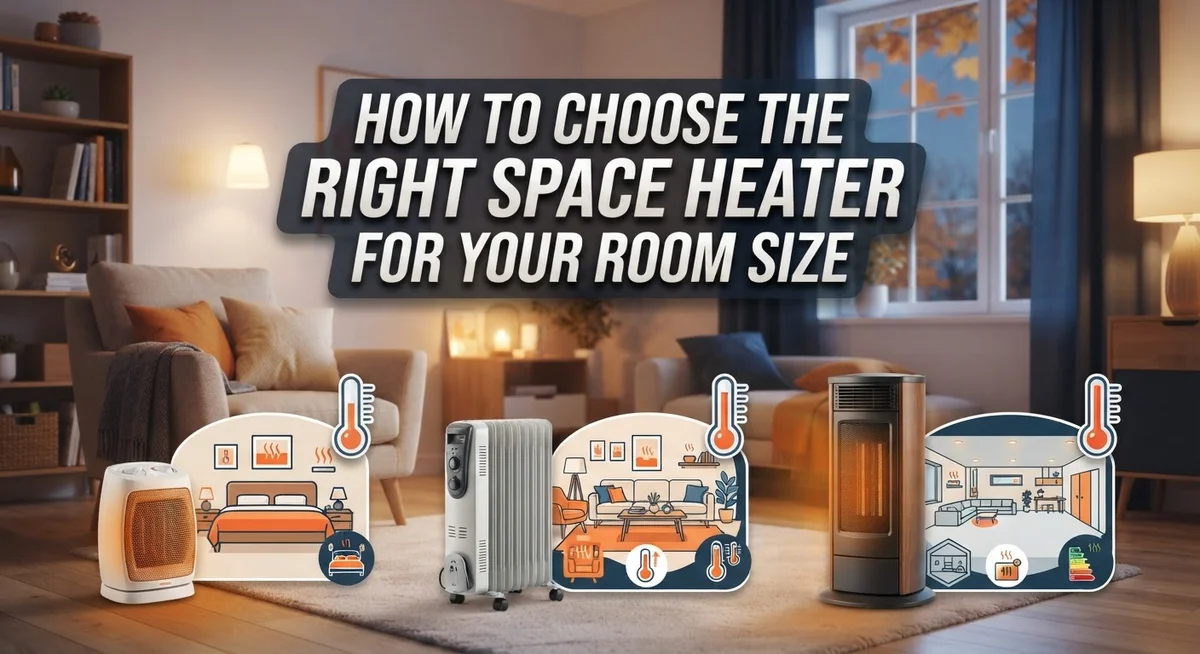
How to Choose the Right Space Heater for Your Room Size
Winter chills can make any room feel cold and uncomfortable. A space heater seems like an easy fix. But picking the wrong one can waste energy and money.
Many people grab the first heater they see. They do not think about room size or safety features. This often leads to poor heating or higher electricity bills.
The right space heater depends on your room’s square footage. A heater that is too small will not warm your space well. One that is too big wastes energy and raises costs.
This guide will help you understand the basics of space heater selection. You will learn how to calculate the right wattage for your room. We will also cover important safety features to look for.
Choosing wisely means comfort without waste. You will discover common mistakes people make when buying heaters. This includes oversizing and ignoring safety switches.
By the end, you will know exactly what to look for. You can pick a heater that fits your space and keeps you safe. Let’s explore how to make the best choice for your room.
In a Nutshell
Here’s a quick summary to help you pick the perfect heater fast.
-
Match wattage to room size. Use about 10 watts per square foot for effective heating. A 1,000 watt heater works well for roughly 10 square meters.
-
Check your voltage needs first. Homes use 120V, 208V, or 240V outlets. Know your setup before you shop.
-
Pick the lowest wattage that works. Bigger isn’t always better. Oversized heaters waste energy and raise your electricity bill.
-
Safety features matter a lot. Look for models with auto shut-off protection. This keeps your home safe from accidents.
-
Never leave a heater unattended. Always stay in the room while it runs. This simple habit prevents most heater related risks.
-
Choose ENERGY STAR certified options. These models balance performance and efficiency. You get warmth without wasting power.
Follow these points, and you will avoid the most common buying mistakes. You will also enjoy a warmer room without unnecessary costs. Smart sizing and safety go hand in hand.
Why Room Size Matters When Choosing a Space Heater
Room size is the most important factor when picking a space heater. A heater that’s too small won’t warm your space effectively. A heater that’s too large wastes energy and costs more to run.
Understanding wattage requirements helps you match the right heater to your room. The general rule is about 10 watts per square foot of floor area. If your room is 100 square feet, you need roughly 1,000 watts of heating power. This calculation gives you a solid starting point for your search.
Different rooms have different needs. A small bedroom might need only 750 to 1,000 watts. A larger living room could require 1,500 to 2,000 watts. Bathrooms and offices fall somewhere in between. Knowing your exact room dimensions helps you avoid guessing.
Oversizing creates real problems that many people overlook. A heater that’s too powerful for your space will cycle on and off frequently. This wastes electricity and increases your monthly bills. It also puts unnecessary strain on the heating element. You pay more money for comfort you don’t actually need.
Undersizing causes different issues. A weak heater runs constantly but never reaches your desired temperature. You stay uncomfortable, and the unit works harder than it should. This shortens the heater’s lifespan and frustrates you during cold months.
Measure your room carefully before shopping. Use a tape measure to find the length and width. Multiply these numbers to get your square footage. Round up slightly if you have high ceilings or poor insulation. These factors reduce heating efficiency, so you might need slightly more wattage.
Once you know your room size, you can confidently choose a heater with the right power output. This simple step saves money and ensures your space stays warm and comfortable all winter long.
Understanding Wattage: The 10-Watts-Per-Square-Foot Rule
The 10 watts per square foot rule is your most useful tool when picking a space heater. This simple calculation helps you find exactly how much power your room actually needs.
Here’s how the rule works. Take your room’s square footage and multiply it by 10. A 100 square foot bedroom needs about 1,000 watts. A 150 square foot living room needs roughly 1,500 watts. This gives you a baseline to work from.
Why does this matter? Wattage directly connects to heating power. A 750 watt heater produces less heat than a 1,500 watt model. The higher the wattage, the faster your room warms up. But more wattage also means higher electricity bills.
The rule accounts for average room conditions. Most rooms have standard insulation and ceiling heights. If your room has poor insulation or drafty windows, you might need slightly more wattage. Rooms with excellent insulation might need less.
Don’t overthink this calculation. The rule gives you a reliable starting point, not a perfect science. You can round numbers to make math easier. A 125 square foot room falls between 1,000 and 1,500 watts. Either option works fine.
One common mistake is oversizing. People think a bigger heater heats faster and better. Reality is different. An oversized heater wastes energy and costs more to run. It also risks overheating your space and creating safety hazards.
Another mistake is undersizing. A heater that’s too small runs constantly without reaching your comfort level. This strains the unit and wastes money on electricity without delivering results.
Use the 10 watt rule as your guide, then adjust slightly based on your room’s condition. Check your actual room measurements before buying. This simple step prevents expensive mistakes and ensures your heater matches your real needs perfectly.
Step-by-Step: Calculating the Right Heater Size for Your Space
Start by measuring your room length and width in feet. Multiply these two numbers together to get your total square footage. This simple math gives you the foundation for everything else.
Once you have your square footage, apply the 10 watts per square foot rule. Take your room size and multiply it by 10. This gives you the wattage your heater should provide. For example, a 200 square foot room needs approximately 2,000 watts of heating power.
Check your home’s electrical system next. Most homes have 120V outlets in bedrooms and living areas. Some spaces have 208V or 240V available. Your outlet type limits which heaters you can safely use. A 240V outlet can handle higher wattage heaters than a standard 120V outlet.
Consider your room’s insulation quality when making adjustments. Poorly insulated rooms with drafts may need slightly more wattage. Well insulated rooms with good sealing might need less. Rooms with high ceilings also require more heating power than rooms with standard heights.
Think about your actual heating needs too. Do you want to heat the entire room or just warm one corner? A bedroom might need full coverage, while an office corner might need less power. This affects whether you stick to the 10 watt rule or adjust downward.
Write down your final number before shopping. This wattage range becomes your target. You now have a clear picture of what size heater matches your space. This calculation prevents both undersizing and oversizing mistakes.
Remember that the 10 watt rule provides a reliable starting point. Real world conditions vary based on climate, insulation, and usage patterns. Your calculation gives you confidence that you’re choosing the right capacity for your specific room.
Voltage Requirements and What They Mean for Your Room
Voltage determines how much power your space heater can draw from your home’s electrical system. Understanding this matters because it affects which heater you can safely use in your room.
Most homes have three common voltage options. Standard bedrooms and living areas typically use 120V outlets. This is the basic voltage found in most American households. Larger spaces or garages sometimes have 208V or 240V available. These higher voltages allow heaters to draw more power without overloading the circuit.
Why does voltage matter for your room? A 120V outlet can safely handle heaters up to about 1,500 watts. This works well for small to medium rooms. If you need more heating power for a larger space, you might need a 240V outlet instead. A 240V connection can support higher wattage heaters, sometimes reaching 5,000 watts or more.
Here’s the practical reality. If your room needs 1,200 watts of heat but you only have a 120V outlet, you cannot safely plug in a high-wattage heater. You would need to either upgrade your outlet or choose a lower wattage model. Trying to force too much power through a 120V circuit creates fire hazards and may trip your breaker repeatedly.
Check your outlet before you purchase. Look at the outlet itself or consult your home’s electrical panel. Most 120V outlets are standard rectangular slots. A 240V outlet looks different, usually with different shaped prongs or additional slots.
The key point: match your heater’s voltage rating to what your room actually has available. Never assume all outlets are the same. Taking five minutes to verify your voltage prevents buying a heater you cannot use safely. This simple step ensures your heating solution works properly for your specific room and electrical setup.
Key Safety Features to Look For
Safety features separate a reliable space heater from a risky one. Your room’s comfort depends on equipment that protects you while heating.
Auto shutoff is non-negotiable. This feature turns the heater off if it tips over or gets blocked. Accidents happen. A heater falls over. The auto shutoff activates immediately. Your room stays safe.
Overheat protection works constantly. The heater monitors its internal temperature. If it gets too hot, the unit shuts down automatically. This prevents fires and electrical damage. You never have to watch the thermometer.
Tip-over switches are essential safety guards. These sensors detect when your heater falls on its side. The power cuts instantly. This matters most in homes with children or pets who might bump the unit.
Thermal cutoff protection adds another layer. It stops the heater if the heating element reaches dangerous temperatures. Your walls and furniture stay protected from heat damage.
Cool-touch exteriors prevent burns. Many heaters have outer casings that stay cool even during operation. This feature matters if you have young children or curious pets in your room.
Cord safety features matter too. Look for heaters with grounded plugs and durable cords. Damaged cords create fire hazards. Inspect the cord before each use.
Never operate an unattended heater. Even with all these features, someone should be present when the unit runs. Safety features work best when you’re nearby and alert.
Choose models with multiple safety certifications. These indicate the heater passed rigorous testing. Certifications prove the manufacturer takes safety seriously.
The best space heater combines all these features. A heater with comprehensive safety protection lets you heat your room with confidence. You focus on comfort while the heater focuses on keeping you safe. That’s the right balance for any room in your home.
Common Sizing and Usage Mistakes to Avoid
People make several predictable mistakes when selecting space heaters. Understanding these errors helps you avoid wasting money and staying uncomfortable.
Oversizing is the biggest mistake. Many people buy heaters that are too powerful for their rooms. They think a larger heater means faster warmth, but this backfires. An oversized heater cycles on and off constantly, which actually wastes electricity and drives up your bills. It also creates uncomfortable temperature swings in your space.
The opposite problem happens too. Some people buy heaters that are too small and then run them continuously at maximum power. This never adequately warms the room, and you end up paying more because the unit works overtime without achieving your comfort goal.
Running heaters unattended is dangerous. Many people turn on their heater and leave the room for hours. This increases fire risk significantly. Space heaters should only operate when someone is present and awake. Never leave one running while you sleep or when nobody is home.
People also ignore safety features when shopping. They focus only on price or wattage and skip heaters without auto shutoff and tip over protection. These features aren’t luxuries. They’re critical for preventing accidents.
Another common error involves ignoring your room’s actual condition. A poorly insulated room needs more heating power than the 10 watts per square foot rule suggests. A well insulated space might need less. Check your windows, doors, and wall quality before finalizing your choice.
Finally, many people fail to match their heater’s voltage to their outlet. They assume all outlets are the same or they try to use adapters. This creates safety hazards and reduces heater performance.
The solution is simple. Calculate your room size accurately, choose appropriate wattage, verify your outlet voltage, prioritize safety features, and stay in the room while the heater runs.
Energy Efficiency Considerations for Everyday Use
Energy efficiency matters when you run a space heater regularly. Your electricity bill climbs quickly if you use the wrong wattage for your room size.
The basic rule is straightforward: use about 10 watts per square foot. A 300 square foot room needs roughly 3,000 watts of heating power. However, you don’t need to run your heater at maximum capacity all the time.
Start with the lowest wattage that keeps your room comfortable. Many heaters offer adjustable settings. Use a lower setting first and increase power only if needed. This simple habit reduces your energy consumption significantly.
Choosing an ENERGY STAR certified model helps too. These heaters meet strict efficiency standards and waste less electricity as heat loss. They deliver more warmth per watt consumed compared to basic models.
Location matters for efficiency. Place your heater in the room’s central area rather than corners. This spreads warmth more evenly and prevents cold spots. Avoid blocking the heater with furniture or curtains, which forces it to work harder.
Insulation affects how hard your heater must work. Seal drafty windows and doors before turning on the heater. Close doors to unused rooms so you only heat occupied spaces. These steps reduce the workload on your heater.
Run your heater only when someone is present in the room. This prevents wasting energy heating empty spaces. Set a timer if your heater has one, so it shuts off automatically after a few hours.
Oversizing your heater wastes money. A 1,500 watt heater costs more to operate than a 750 watt model. Match your heater’s power to your actual room size, not to the largest possible space it might heat.
Regular maintenance keeps efficiency high. Dust accumulates on heating elements and reduces performance. Clean or replace filters according to the manufacturer’s guidelines to maintain peak operation.
Final Thoughts
Choosing the right space heater comes down to simple math. Match your room’s square footage to the correct wattage. This one step prevents most heating problems.
Small rooms need less power than you think. A 100 square foot bedroom only needs about 1,000 watts. Buying something bigger just wastes electricity.
Remember your voltage requirements too. Check whether your outlet supports 120V, 208V, or 240V. This detail affects which heaters will even work in your space.
Safety features matter just as much as sizing. Auto shut-off protection keeps your home safe. Never treat these features as optional extras.
Good heating habits make a real difference. Only run your heater when you are actually in the room. This simple habit saves energy and reduces risks.
Efficiency and safety go hand in hand. An ENERGY STAR certified model gives you both. These heaters use less power while still keeping you warm.
Think about your specific space before buying anything. A drafty room needs different consideration than a well insulated one. Your heating zone location also affects which heater type works best.
Ceramic heaters offer one option among several types available. Each type suits different room conditions and personal preferences. Research your options based on your actual needs.
The biggest takeaway is this: right sized beats oversized every time. A heater matched to your room heats efficiently and safely. An oversized heater just costs more money for the same comfort.
Take time to measure your room first. Calculate the wattage you actually need. Then look for safety features and efficiency ratings.
This approach protects your budget and your home. Smart heater selection starts with accurate information, not guesswork. Use these facts to make a confident choice for your space.
Frequently Asked Questions
How many watts do I need for my room?
Use this simple formula: multiply your room’s square footage by 10. A 150 square foot bedroom needs around 1,500 watts. A 100 square foot office needs approximately 1,000 watts. This rule works for most standard rooms with average insulation.
Can I use one heater for multiple rooms?
One heater works best in a single room. Moving it between spaces wastes energy and time. Each room has different heating needs based on size and insulation. If you need heat in multiple areas, consider using separate heaters in each space.
What voltage should my heater use?
Check your wall outlet first. Most homes have 120V outlets in bedrooms and living areas. Some kitchens and garages have 240V outlets. Match your heater’s voltage to your outlet. Using the wrong voltage creates safety hazards and poor performance.
Why does my heater keep shutting off?
Auto shut-off features protect your home from overheating. The heater may turn off if the room reaches your set temperature. It may also shut down if it gets too hot internally. This is normal and keeps you safe. Never block vents or place the heater against walls.
Is a smaller or larger heater better?
Smaller is better when it meets your needs. An oversized heater wastes electricity and money. A undersized heater struggles to warm your space. Match the wattage to your room size exactly. This balance saves energy and keeps you comfortable without excess costs.

Dillip started Before You Checkout after one too many disappointing online purchases, and now spends his time researching products across home, tech, fitness, and everyday essentials. He writes straightforward reviews and how-to guides for people who want a clear answer, not a sales pitch.