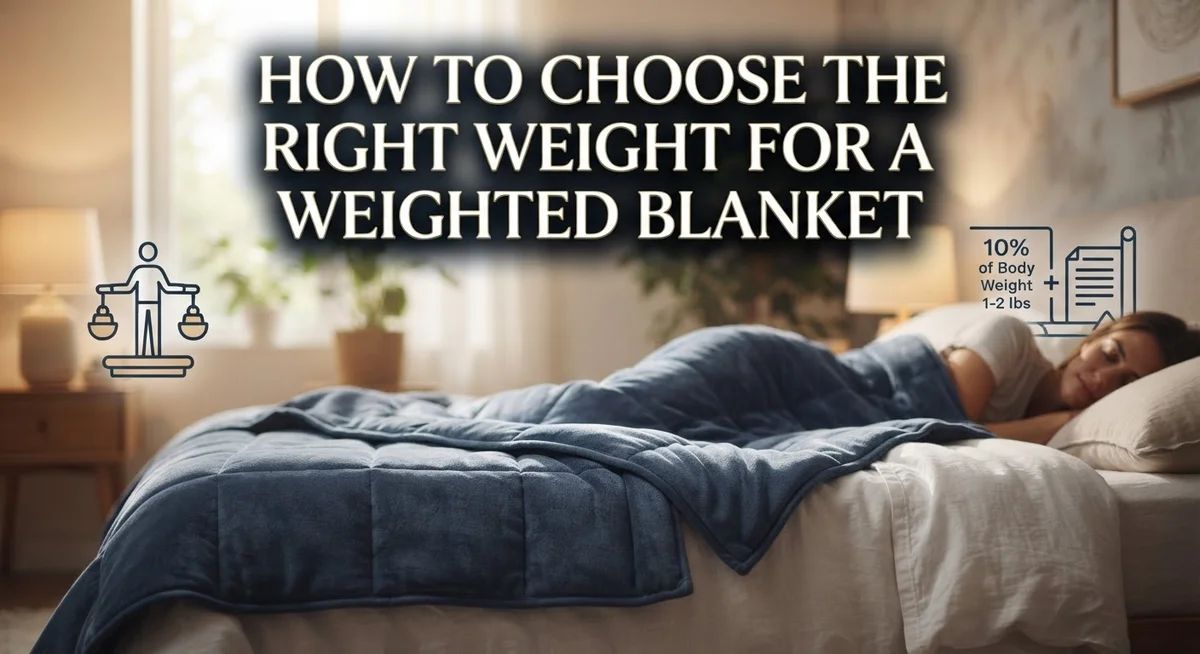
How to Choose the Right Weight for a Weighted Blanket
Picking a weighted blanket sounds simple. But the wrong weight can leave you tossing and turning instead of sleeping soundly.
Too light, and you won’t feel that calming pressure everyone talks about. Too heavy, and you’ll feel stuck instead of soothed.
The good news? There’s a simple formula to get it right. Most experts agree on one core rule. Your blanket should weigh about 10% of your body weight.
This guide breaks down everything you need to know. We’ll show you how to calculate your ideal weight in seconds. You’ll also learn the acceptable range if you want more flexibility.
Sharing a bed with a partner? We cover that too. Buying for a child? There’s a special rule for that as well.
By the end of this article, you’ll know exactly how much your weighted blanket should weigh. No more guessing. No more discomfort.
Let’s find your perfect weight and get you closer to better sleep tonight.
In a Nutshell
Choosing the right weight for your weighted blanket comes down to one simple formula. Here is the quick summary to keep in mind.
• Calculate 10% of your body weight. This is the target weight for your blanket. Most people feel comfortable within this range.
• Stay within the 5 to 12% range. Some people prefer lighter or heavier blankets. This range covers most comfort levels.
• First time buyer? Stick to 10% or less. You can always try a heavier blanket later.
• Sharing a bed? Add both body weights together first. Then calculate 10% of that combined number.
• Shopping for kids? Use the 10% plus 1 to 3 pounds rule. This keeps the blanket safe and effective for smaller bodies.
• Avoid going too heavy too soon. A blanket that feels overwhelming will not help you relax. It may even disrupt your sleep instead of improving it.
Keep these points in mind. They will help you find a weight that feels calming, not crushing.
Why Weighted Blanket Weight Matters
Weight matters because it directly affects how much deep pressure stimulation your body receives. This is the key benefit that makes weighted blankets work.
When a blanket is too light, you won’t feel that grounding sensation at all. Your nervous system won’t get the calming signal it needs. You’ll just have a regular blanket that doesn’t deliver the results you’re looking for.
When a blanket is too heavy, the opposite problem happens. Your body feels trapped instead of comforted. You’ll struggle to move, get hot, and wake up feeling more stressed than relaxed.
The right weight hits a sweet spot. It applies enough pressure to calm your nervous system without restricting your movement. This balance is what helps you fall asleep faster and stay asleep longer.
Your body weight determines this sweet spot. A heavier person needs more weight to feel the pressure effect. A lighter person needs less weight to achieve the same calming result.
This is why the 10% rule exists. It’s based on research about how pressure affects the human body. Scientists found that this percentage works across different body types and ages.
Individual preferences do vary within the acceptable range. Some people sleep better with blankets at 5% of their body weight. Others prefer closer to 12%. But starting at 10% gives you the best foundation.
Getting the weight wrong means wasting money and missing out on better sleep. Too light, and you feel nothing. Too heavy, and you feel uncomfortable. Finding your ideal weight takes just a quick calculation and some honest self assessment.
The effort you put into choosing the right weight pays off every single night. Better sleep quality starts with this one decision.
The 10% Body Weight Rule Explained
The 10% body weight rule is your starting point for finding the right weighted blanket. This simple formula works because it matches the blanket’s pressure to your body’s needs.
Here’s how it works. Take your body weight and multiply it by 0.10. That number is your target weight. If you weigh 150 pounds, your ideal blanket weighs around 15 pounds.
Why 10% specifically? This percentage creates the perfect amount of deep pressure stimulation. Your nervous system responds to this gentle pressure, which helps you relax and fall asleep faster.
The acceptable range is 5 to 12% of your body weight. Some people feel best at 8%, while others prefer 12%. Your personal comfort matters more than hitting exactly 10%. Start at 10% and adjust based on how the blanket feels.
First-time buyers should not exceed 10% initially. Going too heavy too soon can feel overwhelming instead of comforting. Your body needs time to adjust to weighted pressure.
For couples sharing one blanket, add both body weights together first. Then calculate 10% of that combined number. If you weigh 150 pounds and your partner weighs 180 pounds, your combined weight is 330 pounds. Ten percent of 330 is 33 pounds.
Children follow a different rule. Calculate 10% of their body weight, then add 1 to 3 pounds. A child weighing 60 pounds would need a blanket between 7 and 9 pounds.
The key is finding your sweet spot within that 5 to 12% range. Too light, and you miss the calming benefits. Too heavy, and the blanket becomes uncomfortable.
Start by calculating your personal 10%. This gives you a solid foundation. From there, you can adjust based on your individual preferences and how the blanket feels against your body.
Step-by-Step: Calculating Your Ideal Weight
Let’s walk through the math step by step. Your body weight is the starting point for everything.
First, take your current body weight in pounds. Multiply it by 0.10 (which equals 10%). That number is your ideal baseline weight. If you weigh 150 pounds, your target is 15 pounds. If you weigh 200 pounds, aim for 20 pounds.
This calculation works because 10% creates optimal deep pressure without feeling too heavy. Your nervous system responds best to this specific ratio.
Next, check if you fall comfortably within the 5 to 12% range. Some people prefer blankets at 8%, while others like 12%. Both are acceptable. The key is finding what feels right for your body.
Are you buying your first weighted blanket? Stay at or below 10% initially. Your body needs time to adjust to the sensation. Starting lighter helps you ease into the experience.
Sharing a bed with a partner? Add both body weights together first. If you weigh 140 pounds and your partner weighs 180 pounds, that’s 320 pounds combined. Calculate 10% of that total, which gives you 32 pounds. This ensures both of you feel the benefits.
Shopping for a child? Use the 10% plus 1 to 3 pounds rule. A child weighing 60 pounds would need a 7 to 9 pound blanket. This accounts for their smaller frame and developing comfort with weighted products.
Write down your calculated number. This becomes your shopping guideline. Remember that manufacturers round weights, so you might find 15 pounds or 20 pounds instead of exact calculations.
Don’t overthink this. The math is simple, and your result gives you a clear target. Once you have this number, you’re ready to find a blanket that matches your needs.
Choosing a Weight for Couples and Shared Beds
When two people share a bed, finding the right blanket weight requires a slightly different approach than shopping for one person.
Start by adding both partners’ body weights together. If one partner weighs 150 pounds and the other weighs 180 pounds, your combined weight is 330 pounds. Now apply the 10% rule to that total. Ten percent of 330 pounds equals 33 pounds. This becomes your target weight for a shared blanket.
The combined weight approach works because both people benefit from deep pressure stimulation. A blanket that’s too light won’t provide enough pressure for either partner. A blanket that’s too heavy will feel restrictive and uncomfortable for the lighter person.
However, couples often face a real challenge. One partner might prefer 12% of combined weight while the other feels comfortable at only 8%. This happens because people have different pressure preferences even within the acceptable range.
If your preferences differ significantly, you have options. Some couples choose a weight that falls between both preferences. Others use separate blankets on the same bed. Separate blankets let each person customize their experience without compromise.
Consider your bed size too. A queen bed with a weighted blanket designed for it distributes weight more evenly than the same blanket on a smaller mattress. The blanket should cover most of the bed surface without hanging off dramatically.
Test the blanket if possible before committing. Lie on it together for a few minutes. Notice whether it feels grounding or restrictive. Pay attention to how your partner reacts as well.
Temperature matters for couples sharing beds. Weighted blankets trap heat, and two bodies under one blanket create additional warmth. If either partner sleeps hot, look for blankets with breathable materials that allow air circulation.
Start with your calculated combined weight. You can always adjust your choice if one partner finds it uncomfortable after a trial period.
Selecting the Right Weight for Children
Children need a different approach than adults when selecting weighted blanket weight. The standard rule for kids is to calculate 10% of their body weight, then add 1 to 3 pounds extra.
This adjustment exists because children have smaller frames and different comfort needs. A child who weighs 60 pounds would start with a 6 pound base, then add 1 to 3 pounds for a final range of 7 to 9 pounds.
Always check your child’s age first. Most experts recommend weighted blankets for children ages 4 and up. Younger children may struggle with the weight or have difficulty moving if they need to get out of bed quickly.
Safety matters more with kids than adults. Make sure the blanket doesn’t cover your child’s face or neck. The weight should feel comforting, not restrictive or scary. Some children take time to adjust to the sensation, so introduce it gradually.
Watch how your child reacts during the first few nights. Does the blanket help them feel calm? Do they sleep better? These observations tell you whether the weight works for them. If your child seems uncomfortable or restless, the blanket might be too heavy.
Consider your child’s sensory needs too. Kids with autism or ADHD often benefit from weighted blankets. However, some children with sensory sensitivities find them overwhelming. Start with the lower end of the weight range if your child has sensory concerns.
Temperature is another factor. Children generate heat differently than adults. A weighted blanket can trap warmth, so choose breathable materials if your child tends to sleep hot.
Document your child’s weight regularly and reassess the blanket weight as they grow. A blanket that works perfectly at age 7 might become too light by age 10. Plan to upgrade as needed to keep the weight within that safe 10% plus 1 to 3 pounds range.
Tips for First-Time Weighted Blanket Users
Starting with a weighted blanket can feel uncertain. You want comfort without overdoing it. The good news is that a simple formula guides most first-time users.
Begin with the 10% rule as your baseline. Take your body weight and multiply it by 0.10. This gives you the ideal starting point. For example, a 150-pound person would aim for around 15 pounds. This weight provides deep pressure without feeling restrictive or uncomfortable.
Stay conservative on your first purchase. Don’t jump to the upper limit of the 5 to 12% range right away. Your body needs time to adjust to the sensation of a weighted blanket. Many people find that starting at or below 10% helps them sleep better during the adjustment period.
Give yourself a few nights to acclimate. Weighted blankets feel different from regular bedding. Your nervous system needs time to recognize the calming benefits. After three to five nights, you’ll know if the weight feels right for you.
Pay attention to how you feel when you wake up. Do you feel rested? Does the blanket feel comforting rather than suffocating? These responses matter more than any calculation. Everyone’s comfort level varies slightly within that 5 to 12% range.
Temperature plays a role too. Weighted blankets trap more heat than regular blankets. If you sleep hot, you might want to start slightly lighter. This prevents overheating from interfering with your sleep quality.
Consider your bed size as well. A larger bed needs a heavier blanket to distribute weight evenly. A smaller bed works fine with a lighter option.
Don’t hesitate to ask questions before buying. Understanding how weight affects your sleep helps you make a smart choice. Trust your instincts about what feels right for your body and sleeping style.
Common Mistakes to Avoid When Choosing Weight
Many people make predictable errors when picking a weighted blanket weight. Understanding these mistakes helps you avoid frustration and wasted money.
The biggest mistake is choosing a weight that’s too heavy from the start. Some buyers think heavier automatically means better results. This backfires quickly. A blanket that exceeds 12% of your body weight often feels suffocating rather than comforting. You might remove it during the night, defeating the purpose entirely.
Another common error is ignoring your personal comfort zone. The 5 to 12% range exists because people respond differently to pressure. Just because your friend loves a 20 pound blanket doesn’t mean you will. Your body might prefer something lighter or heavier within the acceptable range.
Skipping the calculation step causes problems too. Some people guess their ideal weight instead of doing basic math. This leads to purchasing blankets that don’t match their needs. Take two minutes to multiply your body weight by 0.10. Write down that number. Use it as your anchor point.
Couples often make the mistake of choosing based on one person’s preference. If you share a bed, both partners matter equally. The combined weight approach ensures neither person feels uncomfortable.
Overlooking temperature sensitivity is another frequent error. Weighted blankets trap heat more than regular ones. If you sleep hot, going too heavy compounds the problem. You might feel trapped by both weight and warmth.
Finally, many buyers don’t give themselves enough time to adjust. Your body needs three to five nights to acclimate to deep pressure stimulation. Returning a blanket after one night means you never experienced its actual benefits.
Start conservatively within the 5 to 12% range. Pay attention to how you feel. Make adjustments based on real experience, not assumptions. This approach prevents costly mistakes and leads to genuine satisfaction with your purchase.
Final Thoughts
Choosing the right weight for a weighted blanket does not need to feel complicated. The 10% body weight rule gives you a simple starting point. This one calculation solves most of the guesswork.
Remember that comfort is personal. Some people feel best at 8% of their body weight. Others prefer closer to 12%. Your ideal weight sits somewhere in that range, and only you can find it.
Give your body time to adjust to a new blanket. The first few nights matter. Your nervous system needs time to recognize the pressure as calming instead of unfamiliar.
For couples, always calculate the combined weight before choosing a blanket. Skipping this step often leads to one partner feeling too restricted while the other feels nothing at all.
For children, safety comes first. Follow the “10% plus 1-3 pounds” rule and check the blanket often as your child grows. Their comfort needs change quickly, so re-evaluation is important.
Avoid jumping to a heavy blanket right away. Many buyers regret this choice because it feels good in theory but overwhelming in practice. Start light and adjust upward only if needed.
Temperature control also plays a role in your decision. A blanket that feels perfect in weight but traps too much heat will not help you sleep better.
If you are ever unsure, ask questions before buying. A good retailer will help you understand sizing and weight options clearly.
In the end, the right weighted blanket should feel like a gentle hug, not a burden. Trust the 10% guideline, but let your own comfort guide the final decision.
Small adjustments over time will help you find the perfect fit. Choose wisely, sleep better, and enjoy the calming benefits a properly weighted blanket can bring to your nightly routine.
Frequently Asked Questions
What if I’m between two weight sizes?
Stay with the lighter option for your first purchase. Your body needs time to adjust to weighted blankets. You can always upgrade later if you want more pressure. Most people find their sweet spot within the 5 to 12 percent range of body weight.
Can I use the same blanket weight for my partner?
Not necessarily. Each person should calculate their own ideal weight based on their body weight. If your partner weighs significantly more or less than you do, you might need different blankets. For shared beds, add both weights together, then apply the 10 percent rule to find a compromise weight that works for both of you.
How do I choose a weight for my growing child?
Use the 10 percent rule, then add 1 to 3 pounds extra. Children need slightly heavier blankets than the standard calculation suggests. Check your child’s weight every 6 to 12 months and reassess the blanket size as they grow. Safety always comes first with children’s weighted blankets.
Is 10 percent the only option?
No. The 10 percent guideline is your starting point, but the acceptable range is 5 to 12 percent of body weight. Some people prefer lighter pressure around 5 to 7 percent. Others feel more comfortable at 11 to 12 percent. Your personal preference matters more than a strict number.
What if my blanket feels too heavy after a week?
This is normal. Your nervous system needs adjustment time. Give yourself at least 2 to 3 weeks before deciding the weight doesn’t work. If it still feels overwhelming after that period, consider exchanging it for a lighter option within your acceptable range.

Dillip started Before You Checkout after one too many disappointing online purchases, and now spends his time researching products across home, tech, fitness, and everyday essentials. He writes straightforward reviews and how-to guides for people who want a clear answer, not a sales pitch.