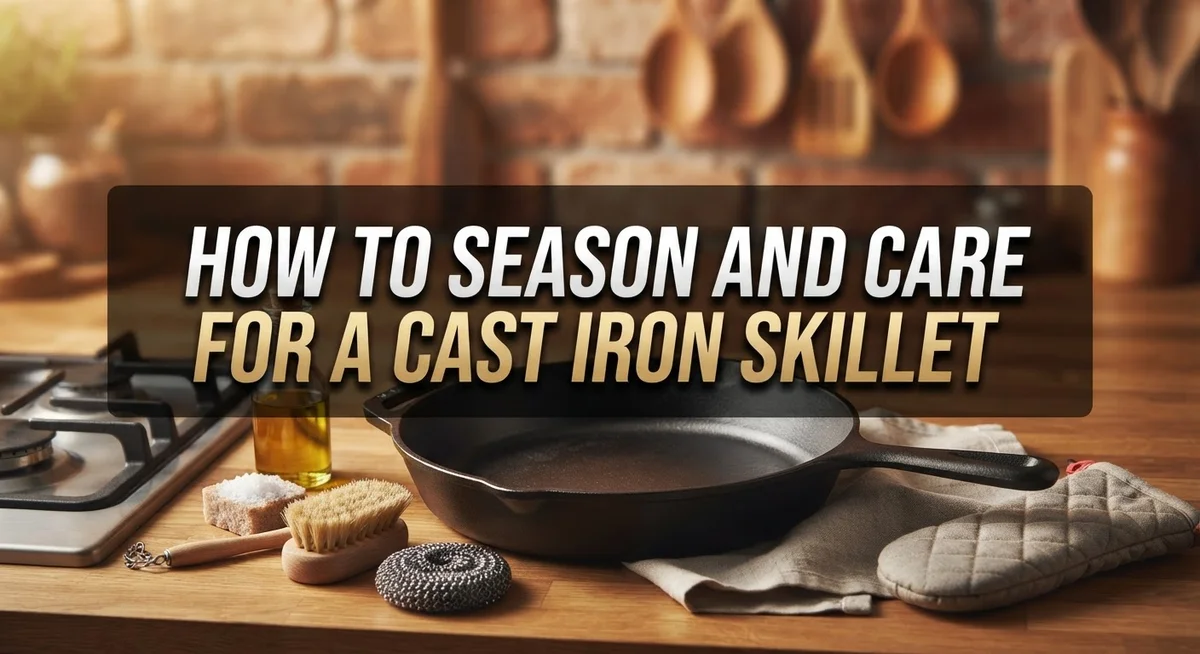
How to Season and Care for a Cast Iron Skillet: Complete Guide
A cast iron skillet can last for generations. But it only works well if you season it right.
Seasoning builds a protective oil layer on the iron’s surface. This layer stops rust. It also gives your skillet that natural non-stick quality cooks love.
Many people buy a cast iron skillet and never learn how to care for it. Then they wonder why food sticks or rust spots appear. The good news is that fixing this is simple.
In this guide, you will learn the exact steps to season your skillet from scratch. We will cover how much oil to use, the right oven temperature, and how many coats you need for a strong finish.
You will also discover the daily habits that keep your skillet in top shape. This includes washing tips, drying tricks, and quick touch up methods.
Finally, we will point out common mistakes that damage seasoning. Avoiding these keeps your skillet non-stick and rust free for years.
By the end, you will know exactly how to season and care for your cast iron skillet like a pro.
In a Nutshell
Here is the quick rundown of everything you need to know:
-
Seasoning builds a thin oil layer on your skillet. This layer stops rust and gives you that smooth, non-stick surface.
-
Wash your skillet, dry it fully, then coat it with a thin layer of oil. Buff off any extra oil so it does not pool or drip.
-
Bake the skillet upside down at 450 to 500°F. Do this three to four times to build a strong base layer.
-
After cooking, wash with warm water and dry your skillet right away. Skip the soap, since it strips the seasoning you worked hard to build.
-
Add a light oil coat after each wash. Heat it on low for a few minutes to lock the seasoning in place.
-
Avoid soaking, skipping the dry step, or leaving extra oil behind. These small mistakes cause rust or sticky spots over time.
Follow these steps, and your skillet will stay smooth, rust free, and ready to cook for years.
What Seasoning Is and Why It Matters
Seasoning is the process of building a protective oil layer on your cast iron skillet’s surface. This layer sits on top of the iron and fills in its tiny pits and rough spots. Think of it like a shield that guards against rust and moisture.
Why does seasoning matter so much? Without it, your skillet will rust quickly and lose its non stick quality. The oil layer bonds to the iron through heat, creating a hard coating that improves with each use. Over time, you build up layers that make cooking easier and protect your investment.
The rough texture of cast iron is actually a feature, not a flaw. Seasoning fills those tiny gaps and creates a smoother cooking surface. Each time you add oil and heat it, another microscopic layer forms. This buildup happens gradually, which is why older skillets often cook better than new ones.
Proper seasoning prevents several problems. It stops rust from forming when moisture touches the iron. It also reduces sticking, so your food slides around more freely. A well seasoned skillet requires less added fat during cooking because the oil layer already provides that non stick surface.
The key is understanding that seasoning is not a one time job. You build and maintain it through repeated applications and proper care. Each cooking session adds to your skillet’s seasoning when you use fat or oil in the pan. Daily maintenance keeps the protective layer strong and functional.
This is why so many cast iron skillets fail. People skip the seasoning steps or use methods that strip away the oil layer. Once you understand how seasoning works, caring for your skillet becomes simple and automatic.
Tools and Ingredients You’ll Need
To season and care for your cast iron skillet properly, you need a short list of basic items. Most of these are things you probably already have at home.
Oil is your most important ingredient. You need a high smoke point oil that can handle oven temperatures between 450 and 500 degrees Fahrenheit. Common choices include vegetable oil, canola oil, and grapeseed oil. Avoid butter or olive oil, as these break down at high heat.
You will need lint free cloths for applying and buffing oil. Paper towels work, but cloth rags are better because they do not leave fibers behind. Keep several on hand since you will use them often.
A basic kitchen sink with warm water and mild dish soap is essential for daily cleaning. You do not need anything fancy. Regular dish soap works fine despite old myths saying soap ruins seasoning.
Aluminum foil prevents your oven from getting messy. Line the bottom rack with foil to catch any oil drips during the seasoning process. This saves you from scrubbing your oven later.
A standard kitchen oven is all you need for baking your skillet. Make sure it can reach 450 to 500 degrees Fahrenheit. An oven thermometer helps you verify the actual temperature inside.
Finally, gather a soft sponge or brush for washing. Avoid steel wool and rough scrubbers, as these scratch away your seasoning layer.
That is truly all you need. No expensive equipment or specialty products required. These simple tools and ingredients are enough to build and maintain a beautiful, long lasting cast iron skillet that performs like a dream.
Step-by-Step: Seasoning Your Skillet from Scratch
The seasoning process starts with a clean slate. Wash your skillet with warm soapy water and dry it completely. Use a towel to remove all moisture. Any water left behind will interfere with oil bonding to the iron surface.
Next, apply a thin layer of oil to the entire skillet. Use your lint free cloth to coat every part including the handle, bottom, and sides. The oil should barely shine on the surface. Many people make the mistake of applying too much oil at this stage.
Now comes the critical buffing step. Take a clean cloth and wipe away almost all the oil you just applied. Your skillet should look almost dry, with just a faint sheen remaining. This prevents sticky buildup and hardened droplets from forming in your oven.
Place your skillet upside down on the center oven rack. Position it so air can circulate underneath. Line the bottom rack with aluminum foil to catch any dripping oil. Heat your oven to 450 to 500 degrees Fahrenheit and bake for one hour.
Let the skillet cool completely in the oven before removing it. This cooling period helps the oil bond permanently to the iron. Once cool, your first layer is done.
Repeat this entire process three to four times total. Each layer adds to your protective coating. After the final bake, your skillet gains a smooth, dark surface that resists rust and sticking. This foundation makes daily cooking and maintenance much easier going forward.
Daily Cleaning and Maintenance Routine
After you finish cooking, let your skillet cool down before cleaning. This prevents burns and helps you handle it safely.
Wash with warm soapy water right after it cools. Use your soft sponge or brush to gently scrub away food particles and stuck bits. Many people fear soap will ruin the seasoning, but mild dish soap is actually fine. The key is using just a small amount.
Dry your skillet immediately and completely. Moisture is the enemy of cast iron. Use a clean cloth and wipe every surface, including the bottom and handle. Don’t leave any wet spots behind. If water sits on the iron, rust will form quickly.
Once dry, apply a thin oil layer while the skillet is still slightly warm. This helps the oil absorb into the seasoning. Use your lint free cloth and rub the oil all over the cooking surface, sides, and bottom. The layer should be so thin you barely see it.
Heat your skillet on low for just two to three minutes. This reinforces the seasoning and helps the oil bond to the iron. You’ll notice the surface starts to darken and smell slightly smoky. That’s exactly what you want.
Let it cool completely before storing. This daily routine takes less than five minutes total.
The consistency matters more than perfection. Skipping the daily oil step occasionally won’t destroy your skillet, but doing it regularly builds a stronger seasoning over time. Each wash and oil application adds another microscopic layer to your protective coating.
This simple routine keeps your skillet in excellent condition for decades.
Common Mistakes That Ruin Seasoning
Ruining your cast iron’s seasoning often happens through simple mistakes. Understanding these errors helps you protect your investment and maintain that valuable non-stick surface.
Soaking your skillet is the quickest way to damage it. Water sitting on iron triggers rust formation. Even a few hours in standing water can create pitting that’s hard to reverse. Always wash quickly and dry immediately after cooking.
Many people believe soap strips seasoning completely. This is partially true with harsh detergents, but mild dish soap used briefly won’t destroy your layers. The real problem comes from leaving soap residue or water on the surface afterward. Rinse thoroughly and dry fast.
Excess oil creates sticky, uneven buildup. When you apply too much oil during seasoning, it pools and hardens into bumpy droplets instead of a smooth protective layer. Buff away almost all oil until the skillet looks barely shiny. Less is always better with seasoning.
Cooking at extremely high temperatures can damage your seasoning. While cast iron handles normal stovetop heat well, prolonged exposure above medium-high heat breaks down oil layers. Let your skillet heat gradually and use appropriate temperatures for your recipe.
Skipping the thorough drying step invites rust problems. Moisture left on the surface, even small amounts, starts oxidation. Pat your skillet dry with a cloth, then wipe again to catch hidden moisture in crevices.
Inconsistent care compounds these mistakes. Missing daily oil applications means your seasoning weakens over time. One missed day won’t hurt, but regular neglect gradually reduces that protective layer.
These mistakes aren’t permanent. You can always re-season your skillet from scratch if damage occurs. The key is recognizing bad habits and replacing them with simple, consistent practices.
Troubleshooting Rust, Stickiness, and Uneven Coating
Rust appears as orange or brown spots on your skillet’s surface. This happens when moisture sits on bare iron for too long. Remove rust immediately by scrubbing the affected area with a stiff brush or steel wool. Use firm circular motions until the rust disappears completely.
After rust removal, re-season that section. Apply a thin oil layer, buff it well, and heat the skillet in your oven at 450°F for 30 minutes. This restores the protective coating and prevents rust from returning.
Stickiness develops when you apply too much oil during seasoning. The excess hardens into sticky droplets instead of a smooth layer. Fix this by stripping the buildup. Scrub your skillet with steel wool and hot water. Start the seasoning process over, using less oil each time. Remember that “thin” means you should barely see the oil on the surface.
Uneven coating shows up as shiny spots next to dull areas. This occurs when you don’t buff the oil thoroughly or skip some sections during application. Heat your skillet upside down in the oven to even out the seasoning. The heat helps oil distribute more uniformly across the surface.
Prevent these problems by following one simple rule: use less oil than you think you need. Most people apply way too much. After oiling, wipe your skillet with a clean cloth until it looks almost dry. Your skillet should look matte, not shiny or wet.
Store your skillet in a dry place. Moisture in cupboards causes rust to form over time. If you live in a humid climate, consider placing a paper towel inside the skillet to absorb excess moisture.
Long-Term Storage and Preservation Tips
Your cast iron skillet needs proper storage to stay in top condition. The foundation of long-term preservation is keeping moisture away from the iron surface at all times.
Store your skillet in a dry location away from humid environments. Basements and areas near sinks are poor choices because moisture in the air causes rust. A kitchen cabinet, pantry shelf, or closet works much better for preservation.
Before storing, ensure your skillet is completely dry. Wipe it down thoroughly with a clean cloth after the final oil application. Any leftover moisture trapped underneath will start rust formation within days.
Apply a thin protective oil layer before storage. This creates a barrier between the iron and any ambient moisture in the air. The oil coating acts like a shield during long periods of non-use.
Stack skillets carefully if you store multiple pieces together. Place paper towels or coffee filters between each skillet to prevent metal-to-metal contact. This spacing reduces the chance of moisture getting trapped between surfaces.
Check your skillet periodically during storage. Every few months, inspect the surface for any orange or brown spots. Catching rust early makes removal much easier than dealing with advanced corrosion.
If your skillet sits unused for several months, re-season it before cooking. The protective oil layer breaks down over time, especially in storage. A quick seasoning session restores the non-stick properties and rust protection.
Keep your skillet away from extreme temperature changes. Moving it from a cold garage to a hot kitchen causes condensation. This moisture creates rust spots quickly. Store in a location with stable temperature and humidity levels for best results.
Restoring a Damaged or Rusty Skillet
Rust happens when water sits on cast iron for too long. You’ll see orange or brown spots forming on the surface. The good news is that rust doesn’t mean your skillet is ruined. You can restore it and get back to cooking.
Start by removing the rust completely. Use a stiff brush or steel wool to scrub away all the orange and brown spots. Work until you see bare metal underneath. Rinse the skillet with warm water and dry it thoroughly with a clean cloth. Make sure no moisture remains on the surface.
Once the rust is gone, re-season that section right away. Apply a very thin coat of oil to the cleaned area. Use a lint free cloth to buff it well. Wipe away any excess oil so no pooling occurs. Heat your skillet upside down in a 450 to 500 degree Fahrenheit oven on the center rack for about an hour. Let it cool completely before removing it.
You may need to repeat this seasoning process 3 to 4 times to build up protection on the restored spot. Each layer adds to the non stick surface and rust resistance.
Prevention stops future rust problems. Always dry your skillet immediately after washing. Never let water sit on the surface. Apply a thin oil layer after each use and heat it briefly on low. Store your skillet in a dry place away from humidity.
Damaged skillets recover quickly with consistent care. Rust removal takes just a few minutes of scrubbing. The seasoning process does most of the work while your oven heats. Your skillet will be cooking ready again soon.
Final Thoughts
Your cast iron skillet rewards you for every bit of care you give it. Simple habits build up over time and create a surface that works better each year.
Seasoning your skillet is not a one time task. It is an ongoing process that becomes second nature once you practice it regularly.
Think of oil as your skillet’s best friend. A thin layer after each wash keeps rust away and strengthens that non-stick surface you worked hard to build.
Daily care makes the biggest difference in your skillet’s life. Washing, drying, and oiling right after cooking takes only a few minutes but saves hours of restoration work later.
Mistakes happen to everyone, even experienced cooks. Rust spots or sticky patches are not the end of your skillet’s story. They are simply signs that need a quick fix.
Your skillet can handle years of use when you treat it right. Proper storage and consistent care turn this simple tool into something you pass down for generations.
Remember that cast iron is forgiving. Unlike other cookware, it heals itself with proper attention and never truly wears out.
Start with the basics: wash gently, dry completely, and oil lightly. These three steps solve most problems before they even begin.
Your patience pays off in the kitchen. A well seasoned skillet cooks food evenly and releases meals easily without sticking.
Keep practicing these care steps until they become routine. Your cast iron skillet will reward that effort with decades of reliable cooking.
In the end, caring for cast iron is simple. Clean it, dry it, oil it, and store it properly. That is really all it takes to keep this kitchen classic working perfectly for years to come.
Frequently Asked Questions
Can I use soap on my cast iron skillet?
Yes, you can use soap. The old myth says soap strips seasoning, but modern dish soap is gentle enough. Use warm soapy water and a soft cloth or sponge. Wash right after cooking while the skillet is still warm. The key is to dry it completely afterward. Moisture causes rust, not soap.
How often should I season my cast iron?
Season your skillet during the initial buildup phase (3 to 4 times when new). After that, daily light oiling keeps the seasoning strong. When you cook with oil or butter, you’re actually adding to the seasoning naturally. If you notice the surface getting dull or sticky spots appearing, do a full seasoning cycle again. Most cooks season once every few months as maintenance.
What should I do if my skillet feels sticky?
Stickiness usually means too much oil pooled on the surface. Wipe the skillet down with a lint-free cloth and heat it on low for a few minutes. The heat helps the oil bond properly. If stickiness persists, you may have old, hardened oil buildup. Wash it thoroughly, dry completely, then apply a fresh thin coat of oil and heat it again.
Why does my skillet rust even though I dry it?
Rust forms when water sits on iron. You might be missing spots during drying, or moisture is collecting in crevices. After washing, use a clean towel and wipe every surface, including the bottom and sides. Heat the skillet on low for one to two minutes to evaporate any remaining moisture. Then apply your protective oil layer right away.
Can I use my skillet on high heat?
Avoid cooking at very high temperatures regularly. Extreme heat can damage the seasoning layer and warp the skillet. Use medium to medium high heat for most cooking. High heat is fine occasionally, but low and medium heat keeps your seasoning intact longer and cooks food evenly.

Dillip started Before You Checkout after one too many disappointing online purchases, and now spends his time researching products across home, tech, fitness, and everyday essentials. He writes straightforward reviews and how-to guides for people who want a clear answer, not a sales pitch.