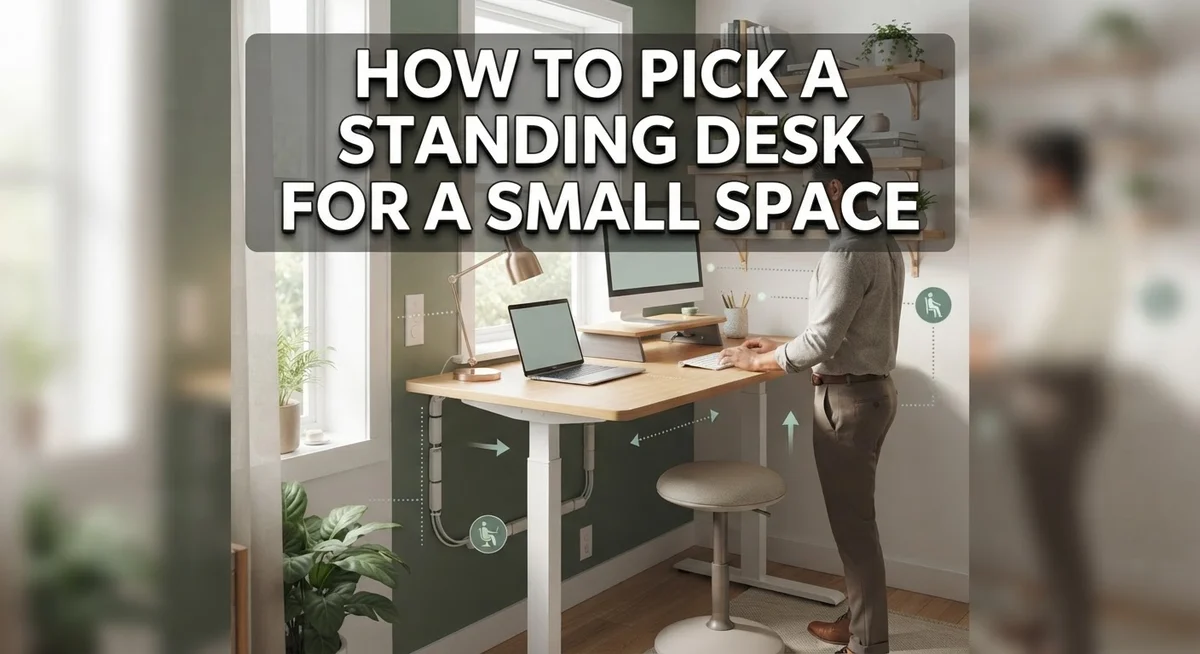
How to Pick a Standing Desk for a Small Space
Small rooms need smart choices. A standing desk can boost your health and energy. But the wrong size can make your space feel cramped and messy.
Picking a standing desk for a tight room takes more than style. You need to think about width, depth, and clearance. You also need room for your chair and daily movement.
Many people skip this step. They buy a desk that looks great online. Then it barely fits in their studio or bedroom corner.
This guide helps you avoid that mistake. We will show you how to measure your space correctly. You will learn the best size ranges for small apartments and tight rooms.
We will also cover collision points. These are spots where your desk might bump into walls or furniture as it rises and lowers. Missing this detail is a common error.
By the end, you will know how to plan cable management too. You will also understand the difference between electric and manual desks for compact living.
Let’s find the perfect fit for your small space.
In a Nutshell
Picking the right standing desk for a small space comes down to a few key checks. Here’s what matters most:
-
Measure your desktop size first. Aim for 40 to 48 inches wide and 24 to 30 inches deep. If the desk sits against a wall, stick to 24 inches deep.
-
Check clearance around the desk. Leave room for your chair to slide back and for you to walk around freely.
-
Watch for collision points. Test how the desk behaves at its lowest height. Make sure it won’t hit nearby furniture or walls.
-
Choose electric over manual. Electric desks adjust height with a button. This makes daily use much simpler in tight spots.
-
Plan your cable management early. Compact setups get messy fast without a clear plan for wires and cords.
-
Know your budget before you shop. This narrows your choices and saves time when comparing options.
Small spaces need smart planning, not just style. Follow these steps and you’ll avoid common sizing mistakes. A little measuring now saves headaches later.
Why Desk Size and Placement Matter in Small Rooms
Desk size and placement are critical in small rooms because they determine whether your workspace feels functional or cramped. A desk that’s too large consumes precious floor space and blocks movement. A desk positioned poorly creates safety hazards and makes daily use frustrating.
Proper sizing prevents overcrowding. A desk that fits your room’s dimensions leaves breathing room for your chair, your body, and foot traffic. When a desk takes up too much square footage, you lose the ability to move comfortably around it. This limitation affects your productivity and comfort throughout the day.
Placement planning stops collision problems. Standing desks move up and down, which means they occupy different vertical spaces at different times. At the lowest position, the desk might extend further into your room than you expect. If you don’t account for this, your legs or feet could hit the desk base when you sit or stand. Measuring these collision points before purchase prevents painful surprises.
Clearance needs are real in compact areas. Your chair requires space to roll backward. Your body needs room to stand comfortably without bumping walls or furniture. Doorways, windows, and storage units all factor into the equation. A desk placed too close to any of these elements creates obstacles.
Strategic placement maximizes usable space. Positioning your desk against a wall frees up floor area in the center of the room. Placing it near natural light improves your work environment. Keeping it away from high traffic zones reduces distractions and accidents.
Taking time to measure your room, mark desk dimensions, and identify collision points upfront saves you from purchasing a desk that doesn’t fit your lifestyle. This simple planning step transforms a small space into an efficient, safe workspace where standing and working feel natural rather than forced.
Ideal Standing Desk Dimensions for Compact Spaces
A standing desk in a small space must fit your room without creating obstacles. The right dimensions make your workspace both functional and comfortable.
Width matters most for your work surface. Aim for 40 to 48 inches wide. This gives you enough room for your monitor, keyboard, and other essentials. Anything narrower than 40 inches feels cramped. Anything wider than 48 inches may not fit through doorways or leave walking space in tight rooms.
Depth is equally important but often overlooked. Choose 24 to 30 inches deep. A 24 inch depth works best if your desk must sit against a wall. This shallow dimension keeps the desk from jutting into your room too far. A 30 inch depth provides more comfortable space for your keyboard and mouse if you have a bit more clearance to work with.
Measure your specific space before buying anything. Mark the outline of your planned desk on the floor with tape. Walk around it. Sit in your chair and roll backward. Open drawers or shelves if your desk has them. This real world test reveals problems you might miss on paper.
Account for the desk’s movement range. Standing desks rise and fall. At the lowest position, your desk extends downward into your room’s space. At the highest position, it takes up vertical clearance. Check both positions for collision risks with walls, furniture, or light fixtures.
Consider your door and hallway width. A desk that fits your room perfectly is useless if you cannot move it inside. Measure doorways and hallways before finalizing your desk choice.
Small spaces reward careful planning. Take time to measure and test your layout. The right dimensions transform a cramped room into a workspace that actually works for standing and sitting throughout your day.
Step-by-Step: Measuring Your Space Before You Buy
Before you buy a standing desk for your small space, measure everything. This step saves you from expensive mistakes and frustration.
Start by identifying where your desk will sit. Use a tape measure to record the exact width and depth of that location. Write these numbers down. Next, measure the distance from your planned desk spot to nearby walls, windows, and furniture. You need this information to confirm the desk fits without blocking pathways.
Mark the desk’s outline on your floor using painter’s tape. This visual helps you see how much room remains for your chair and movement. Stand in that space and move around. Can you pull your chair back comfortably? Can you walk past the desk without squeezing? If the answer is no, your space is too tight for that desk size.
Check the height range of desks you’re considering. Most standing desks lower to around 22 inches and raise to 48 inches. At its lowest point, measure how close the desk gets to your legs and feet. Test for collision risks by simulating sitting and standing motions in your marked area.
Measure doorways and hallways too. A desk that fits your room perfectly won’t help if you can’t move it inside. Record the width of your entry points.
Pay attention to vertical clearance as well. If you have low shelves, hanging lamps, or ceiling fans, note their heights. Your standing desk must fit beneath them without creating hazards.
Document everything on a simple sketch. Include room dimensions, furniture placement, doorway widths, and your desk’s intended location. This sketch becomes your reference when comparing desk options. Accurate measurements prevent impulse purchases that don’t actually work in your space.
Planning Clearance for Chairs, Walking Paths, and Collisions
Your chair needs room to roll backward and forward without hitting walls or other furniture. Measure at least 24 to 36 inches behind where your chair will sit. This space lets you move comfortably while seated and prevents frustration during your workday.
Walking paths matter more than you might think. You need clear routes to your desk, your door, and other parts of your room. A narrow path forces you to squeeze past your workspace every time you move, which gets old fast. Aim for at least 18 to 24 inches of walking space on each side of your desk.
Collision points happen at different desk heights. Your standing desk moves up and down throughout the day. At its lowest position, the desk base or legs might stick out further than the desktop does. Check this by measuring the desk’s footprint at both sitting and standing heights. You might find that the base extends beyond the work surface, creating a tripping hazard or blocking your walking path.
Test your layout by walking around your imaginary desk placement. Simulate where your chair would sit and roll. Pretend to stand up and step back. Imagine reaching for items on nearby shelves or opening drawers. These mental walkthroughs catch problems before you buy.
Mark collision zones on your floor plan. Use tape to outline not just the desktop but also the chair space and walking paths. This visual representation shows you exactly what fits. You’ll see immediately if your desk placement leaves enough room or if it creates tight spots.
Small spaces demand this extra planning step. A desk that looks fine in photos might create obstacles in your actual room. Spend 15 minutes measuring and marking before making your purchase decision. This prevents buying a desk that doesn’t work for your space.
Electric vs. Manual Desks: What Fits Small Spaces Best
Electric and manual standing desks serve different needs in small spaces. Understanding which type works best for your room helps you make the right choice.
Manual desks use a hand crank or lever system to adjust height. They cost less money upfront and require no electricity. You simply turn the crank to raise or lower your work surface. Manual models work well if your budget is tight. However, they demand physical effort each time you change positions. In a small space where you might adjust frequently, this effort adds up quickly.
Electric desks use motors to raise and lower automatically. You press a button, and the desk moves to your desired height. This convenience matters more in compact areas because you’ll adjust more often. Electric models make switching between sitting and standing effortless. They also allow you to save multiple height presets. This feature helps you return to your perfect working position instantly.
For small spaces, electric desks offer practical advantages. The ease of adjustment encourages you to switch positions throughout your day. This movement benefits your health and energy levels. Electric desks also tend to have smoother, quieter operation. Manual desks can be noisy and disruptive in shared apartments or studios.
Consider your lifestyle when deciding. If you work from home and adjust positions frequently, electric makes sense. If you change height once or twice daily, manual works fine. Think about your physical strength too. Cranking a manual desk repeatedly can tire your arms.
Space itself doesn’t dictate which type you need. Both electric and manual models come in compact sizes. Your decision depends on budget, convenience preferences, and how often you plan to adjust. Test both types if possible before purchasing. This hands on experience reveals which system fits your daily routine better.
Cable Management and Layout Tips for Compact Setups
Cable management becomes critical in compact setups because wires clutter small spaces fast. When your desk sits close to walls or other furniture, cables need a clear system to stay organized and out of sight.
Start by identifying all cables you’ll use. Power cords, monitor cables, USB lines, and charging wires add up quickly. Count them before you buy your desk so you know what space you need for routing.
Plan your cable pathways before assembly. Most standing desks have cable trays underneath or along the legs. These trays run cables away from foot traffic and keep them from tangling. Position the tray on the side closest to your power outlet to minimize cable length.
Use cable clips or sleeves to bundle wires together. Bundles take up less visual space than loose cables scattered across your floor. Small clips mount easily to desk legs or walls without permanent damage.
Route cables along walls whenever possible. This keeps your floor clear for chair movement and walking space. Run wires behind furniture or along baseboards to hide them from view.
Consider cable length carefully in small rooms. Longer cables give you flexibility but create more clutter. Measure the distance from your desk to your power outlet, then choose cables slightly longer than that measurement.
Label your cables at both ends. In tight spaces, you’ll adjust your setup frequently. Labels help you quickly identify which wire connects to what device.
Keep a small power strip on or under your desk. This consolidates multiple cords into one connection point. A strip with an on/off switch lets you power down everything at once when you’re done working.
Test your cable setup during a trial run. Sit at your desk, raise it to standing height, then lower it back down. Make sure no cables get pinched or caught during movement. Adjust routing as needed before your final setup.
Common Mistakes to Avoid When Choosing a Desk
Many people buy standing desks without measuring their actual space first. This leads to desks that don’t fit or create awkward layouts. Always measure your room dimensions before shopping.
Overcrowding happens when you fail to account for the desk, chair, and movement space together. A desk might fit physically, but you’ll feel cramped when you try to work. Plan for at least 18 to 24 inches behind your chair for pushing it back and forth.
Not checking collision points at different heights is a common oversight. Your standing desk moves up and down. At the lowest position, the legs might hit your feet or a nearby wall. At the highest position, the desktop could block a window or light fixture. Test these positions on your floor plan before purchasing.
Ignoring cable management space causes frustration in small rooms. Cables need pathways. If you don’t plan where they go, they’ll tangle and create visual clutter. Account for cable trays and cord routing when you measure.
Forgetting about chair clearance is another frequent error. Your office chair needs room to roll in all directions. A desk squeezed into a corner might leave you unable to move your chair comfortably. This reduces your ability to shift positions throughout the day.
Skipping the sketch step leads to poor decisions. Draw your room layout on paper or digitally. Mark the desk outline, chair space, doorways, and obstacles. This simple step prevents expensive mistakes.
Not considering your personal workflow wastes money. If you rarely stand, a basic desk works fine. If you alternate between sitting and standing frequently, you need reliable height adjustment. Think about how you actually work before choosing.
These mistakes are preventable. Take time to plan your space properly, and you’ll find a standing desk that truly works for your small room.
Final Thoughts
Picking a standing desk for a small space comes down to careful planning. You need to measure your room first. Then you match desk size to your actual layout.
Small spaces don’t limit your options as much as you think. The right desk fits your space when you plan ahead. Skipping this step causes most problems people face later.
Your desk width and depth matter more than fancy features. A desk that’s too big creates daily frustration. It blocks pathways and crowds your room.
Focus on function first, then style. A compact desk that suits your workflow beats a larger desk that looks nice but feels cramped. Your daily comfort depends on this choice.
Think about how you’ll actually use the desk. Will you sit and stand often? Do you need space for a monitor or laptop only? These questions guide your final decision.
Electric desks work well for most small spaces. They save effort and encourage more movement throughout your day. Manual desks work too if budget matters more to you.
Cable management deserves attention before you buy. A tidy setup keeps your small space looking clean and organized. This small detail improves your daily experience significantly.
Always test collision points at different heights. This step prevents wall damage and keeps furniture safe. It takes minutes but saves headaches later.
Your chair and walking space count as much as the desk itself. Leave room to move comfortably. Don’t let the desk dominate your entire room.
Take your time with this decision. Measure twice, sketch your layout, and think through your daily habits. A little planning now means years of comfortable use ahead.
The best standing desk isn’t the most expensive one. It’s the one that fits your space, your habits, and your budget perfectly.
Frequently Asked Questions
What size standing desk fits a small bedroom or studio?
Aim for a desk that is 40 to 48 inches wide and 24 to 30 inches deep. These dimensions give you enough surface area without overwhelming the room. If your space is extremely tight, a 24 inch depth works when the desk sits against a wall. Always measure your actual space before buying anything.
How much clearance do I need around my standing desk?
You need space for your chair to roll out and back in smoothly. Add at least 18 to 24 inches behind where you’ll sit. Check the distance from your desk to the nearest wall or furniture on all sides. Walk around the desk at its lowest and highest positions to spot any collision points. This step prevents frustration later.
Should I choose an electric or manual standing desk for a small space?
Electric desks are easier to use in compact areas. You press a button to adjust height instead of cranking a handle. Manual options take up less space underneath, but electric models encourage you to change positions more often throughout the day. Both work fine. Choose based on your budget and how often you plan to adjust the height.
Can a standing desk work in a studio apartment?
Yes, absolutely. Studios are small, but a standing desk still fits with proper planning. Measure your exact floor space first. Sketch out where the desk, chair, and walking paths go. Account for your door swing and any other obstacles. A well placed compact desk actually saves space compared to a traditional large table.

Dillip started Before You Checkout after one too many disappointing online purchases, and now spends his time researching products across home, tech, fitness, and everyday essentials. He writes straightforward reviews and how-to guides for people who want a clear answer, not a sales pitch.